
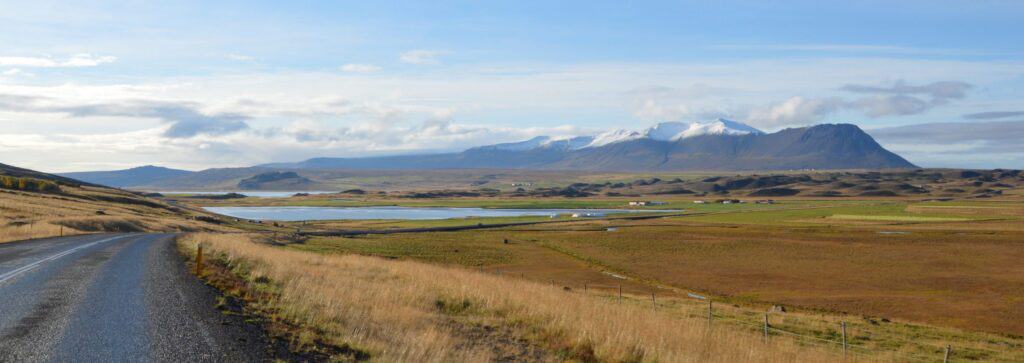
When traveling around Iceland on the Ring Road, you’ll pass villages here and there. To get familiar with what the different villages in Iceland have to offer, what services they provide, campsite info, and important numbers, we put together this village guide. We will skip the villages in Snæfellsnes & the Westfjords and limit the guide to villages on the Ring Road or close by. Reykjavík is Iceland’s capital and by far the largest city in the country. Together with the surrounding towns in the capital region, it accounts for roughly two-thirds of Iceland’s population. You will find many villages here with less than 200 people which is often used internationally as a benchmark for defining a village. We even have places with less than 50 people and then there are places with the village name on both sides of the sign! (joke)
Let’s start our guide in Reykjavík by driving our camper van in a clockwise direction heading north through the most charming Iceland villages ans small towns in the country.
 Mosfellsbær
This Icelandic village is just outside Reykjavík. Although born in Reykjavík, the Icelandic Nobel prize-winning author Halldór Laxness spent most of his life in Mosfellsbær, and you can visit where he lived. There are about 10,000 people in Mosfellsbær and you’ll find most of your needs fulfilled here. Many say that the Mosfellsbær bakery is the best in the country but we’ll let others decide that! 🙂
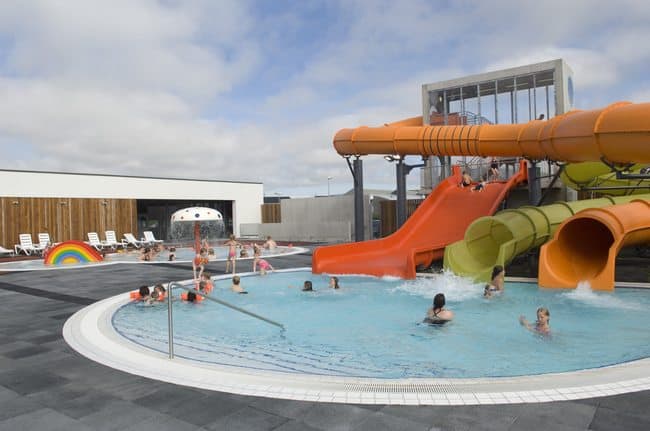
You’ll also find a wonderful outdoor swimming pool like in most villages and towns in Iceland. The campsite has everything you need and is conveniently located, more or less, in the middle of town.
Campsite GPS: 64°10’13.84″N 21°41’35.36″W
 Kjalarnes
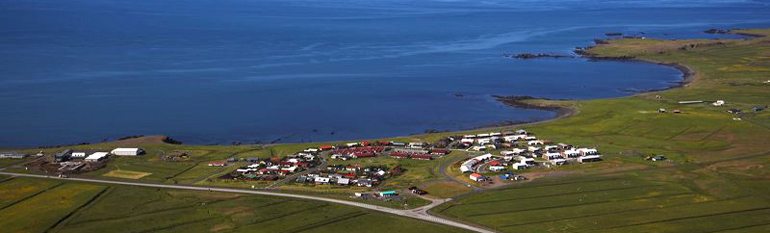
For some reason, the next village is considered a neighborhood in Reykjavík making it the largest town, but the smallest in population. Just under 600 people live here under the surrounding mountains of Esja. The mountain might also be the biggest attraction in Kjalarnes and many people climb to the top every year. There aren’t any low-price food stores here but you have a gas station and a swimming pool! At times, the winds here can be astounding as can be seen in bushes and trees that grow in the common wind direction.
 Borgarnes
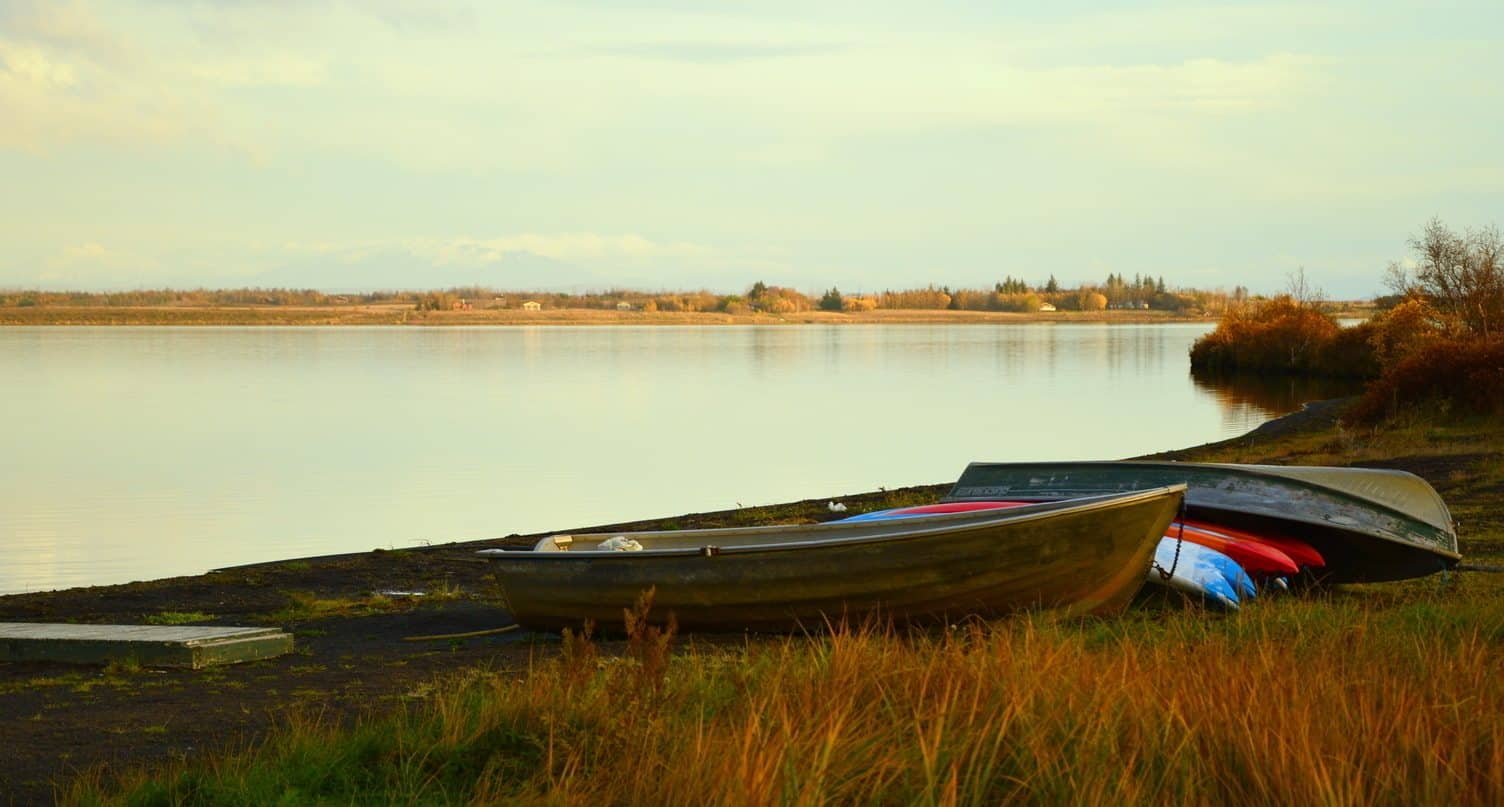
An hour away from Reykjavík, depending on whether you drive under or around the fjord Hvalfjörður, you’ll arrive in Borgarnes. Just under 2000 people live here in harmony with nature. Here you will find everything you need from banks, the post office, gas stations, grocery stores, restaurants and bars. You also have an excellent campsite here as well as some interesting historical sites and a golf course too.
In case of a non-emergency, medical situation call 432-1430. In any emergency, call 112.
From here on, you will only pass small Iceland villages, all the way to Akureyri in the north. But there are gas stations everywhere so you won’t ever be alone. Better yet where there are gas stations, there are hot dogs too! 🙂
Campsite GPS: 64°33’5.41″N 21°54’30.59″W
Bifröst
This is a university village with about 600 to 700 students during the school year. It was founded in Reykjavík in 1918 and moved to Bifröst in 1955. It lies by the roots of Mt. Baula and below the lava field east of the school is the waterfall Glanni, which the 9-hole golf course in the area is named after.
There are also many beautiful hiking trails in the area and a restaurant. This is the last village you’ll pass before driving over the mountain pass Holtavörðuheiði that will take you to north Iceland.
 Laugarbakki
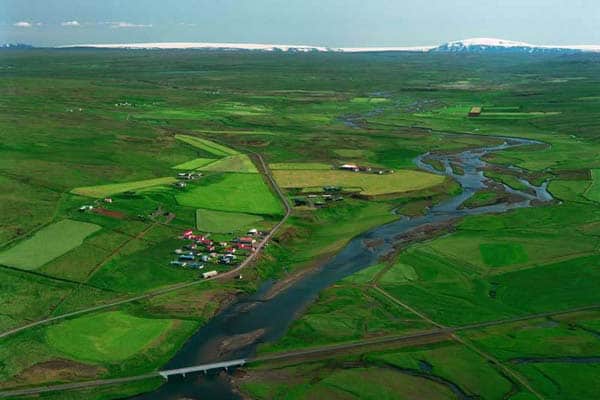
After you have arrived in north Iceland, your first village will be Laugarbakki, It’s one of the smallest villages you’ll see with a population of around 60 people. It lies above the beautiful salmon river Miðfjarðará. The village has a pool that has been converted to hot tubs. There is also a huge ballroom with room for 400 people which is mostly used by the locals for different celebrations. There is a community center and the old boarding school has been converted into a hotel.
Campsite GPS: 65°19’36.49″N 20°53’33.11″W
 Blönduós
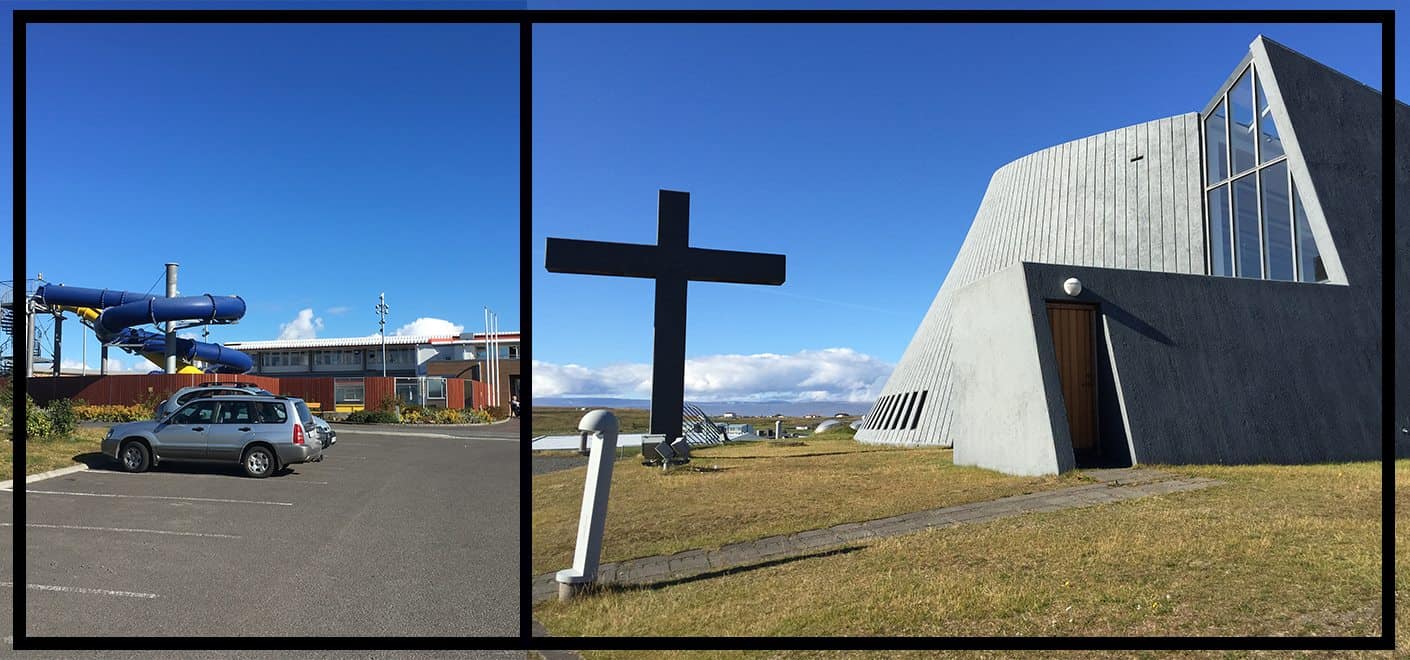
Blönduós is similar to Borgarnes, as they offer many of the same services, including an excellent campsite. Around the village, there are many historical sites and a few interesting museums. The gorgeous river Blanda runs through the village and is one of the longest rivers in Iceland.
Around Blönduós you have fantastic fishing too, both in the river and in the lakes and rivers around. Inquire locally about a fishing permit.
In case of a non-emergency, medical situation call 455-4100. In any emergency, call 112.
Campsite GPS: 65°39’30.24″N 20°16’37.93″W
 Varmahlíð
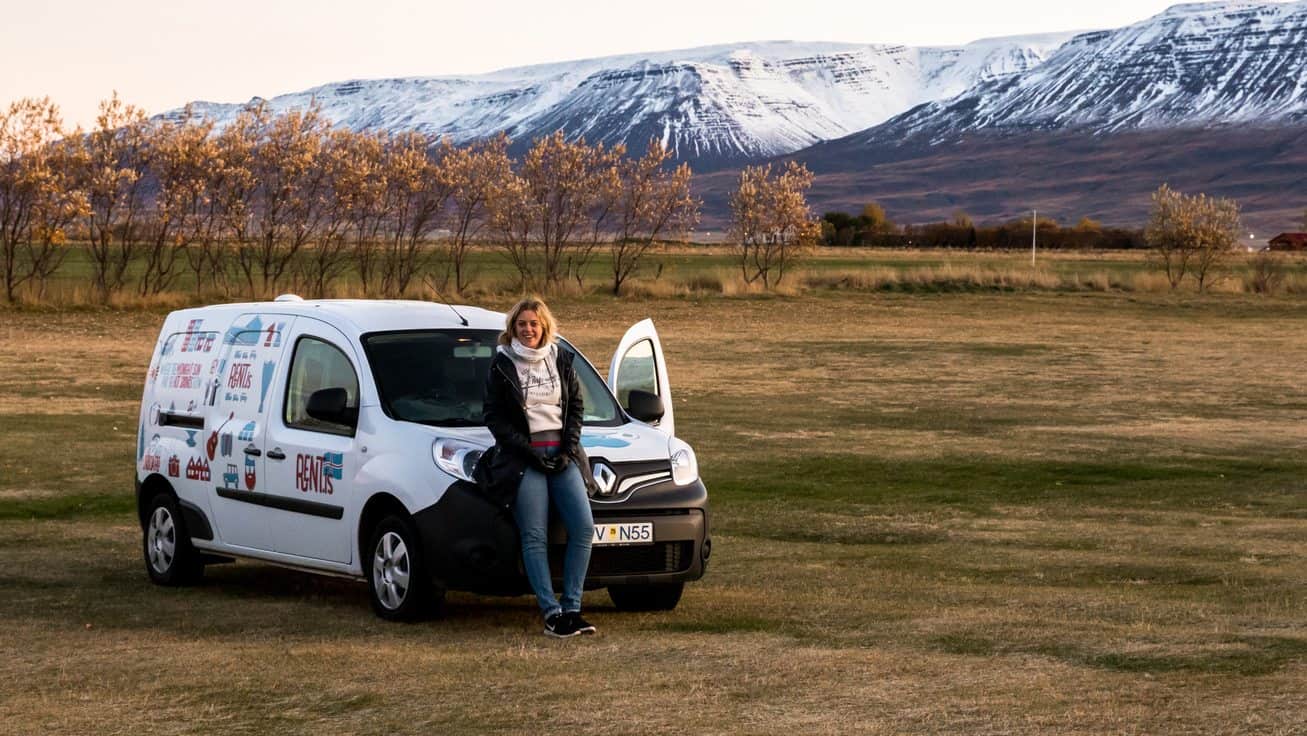
This little village with around 120 people is the last one before you arrive in Akureyri. You have a very nice campsite there, and you’ll be in the center of horse riding in Iceland; stables with horses are everywhere here. North of the village you’ll find one of the nicest turf farms in Iceland called Glaumbær, where traditional turf houses scatter the land.
Campsite GPS: 65°33’8.05″N 19°27’21.00″W
 Akureyri
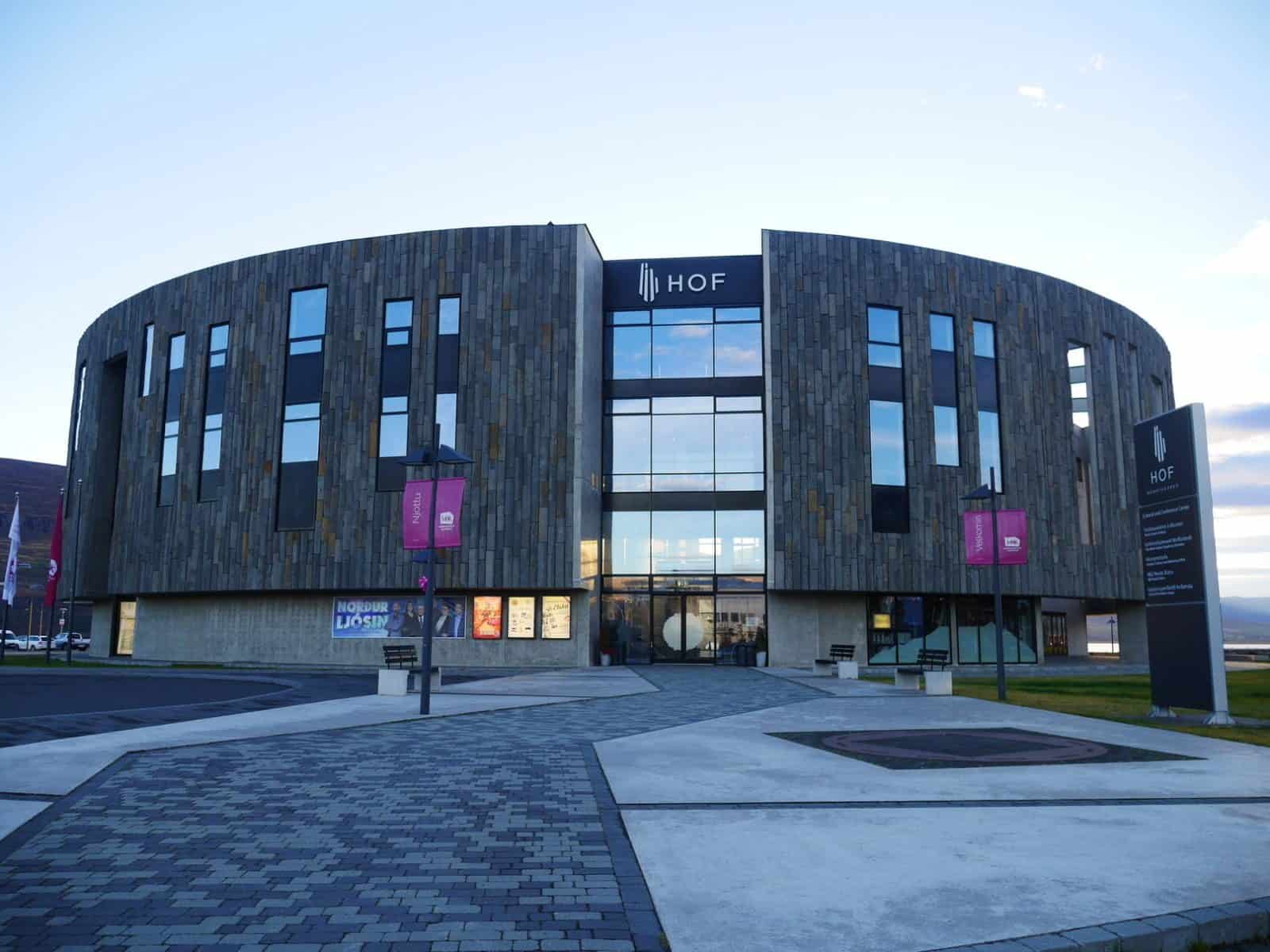
Akureyri is the capital of north Iceland with a population close to 19,000 people. Here you’ll find all the services you might need, including a great campsite right within the town center. They also have a wonderful music hall (shown on the right) with a full schedule year-around.
There are also whale watching tours from the harbor. You can take the ferry out to Grímsey (population around 60 people), a small island settlement and the only place in Iceland where you can cross the Arctic Circle.
In case of a non-emergency, medical situation, call 460-4600 or 463-0100. In any emergency, call 112.
Campsite GPS: 65°40’43.11″N 18° 6’2.80″W
Laugar
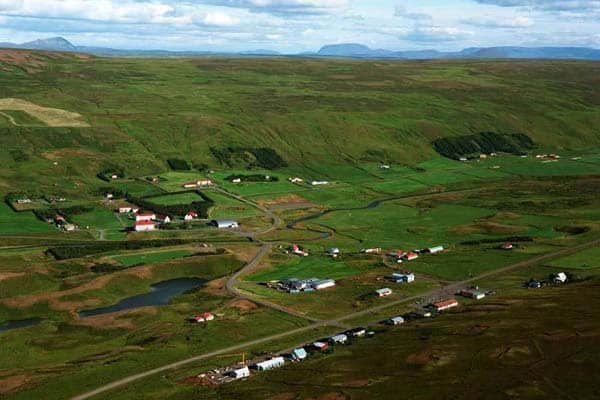
This wonderful village lies in the lush valley of Reykjadalur (not to be confused with the Reykjadalur hot springs in the south; see below under Hveragerði). The village grew up due to geothermal activities in the area. Maybe that is the reason for their gorgeous pool. There is also a gym by the pool. Despite having just over 100 people, they have a restaurant, a bank, primary and secondary schools and a shop. The campsite is found in the middle of the village.
In case of a non-emergency, medical situation call 464-0650. In any emergency, call 112.
Campsite GPS: N65° 43′ 22.018″ W17° 21′ 28.018″
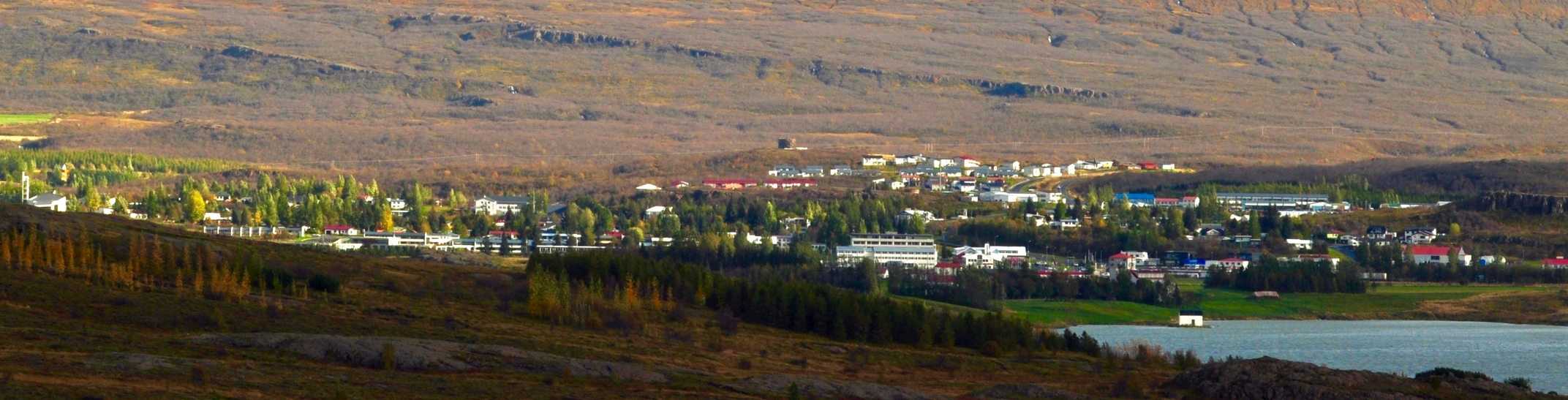
Reykjahlíð
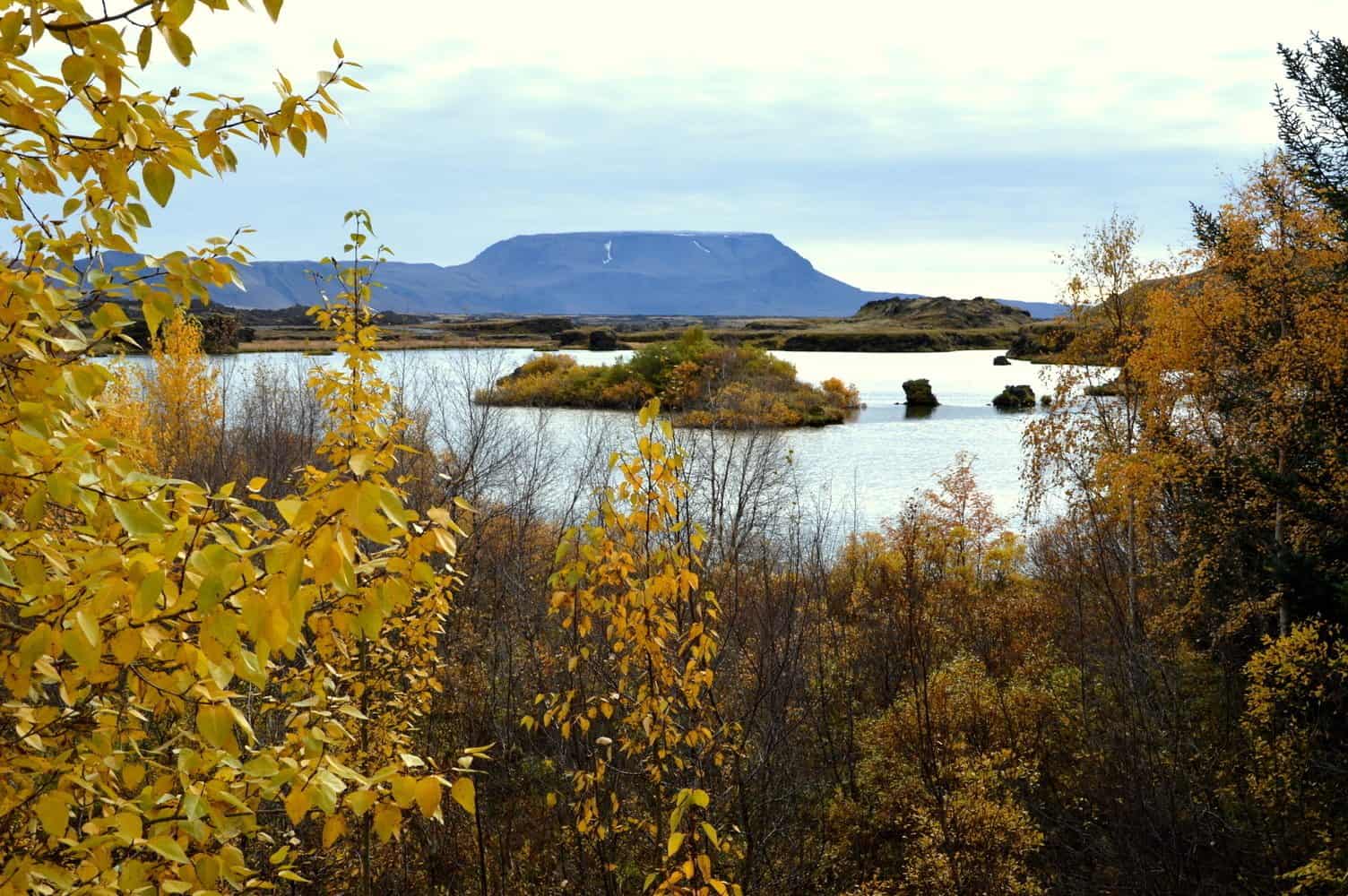
The beautiful little village by Lake Mývatn has just over 200 people living there. There are 3 different camping sites in Reykjahlíð. The village has everything you need like a grocery store, bank, post office, and a swimming pool. You also can’t forget the Mývatn nature baths, north Iceland’s answer to the Blue Lagoon. Equally good but much cheaper, we are told. Many also use Reykjahlíð as their center for their explorations of the northern part of Iceland. During summer, remember to bring bug spray and a mosquito net in case the Midges are out.
In case of a non-emergency, medical situation call 464-0660. In any emergency, call 112.
Egilsstaðir
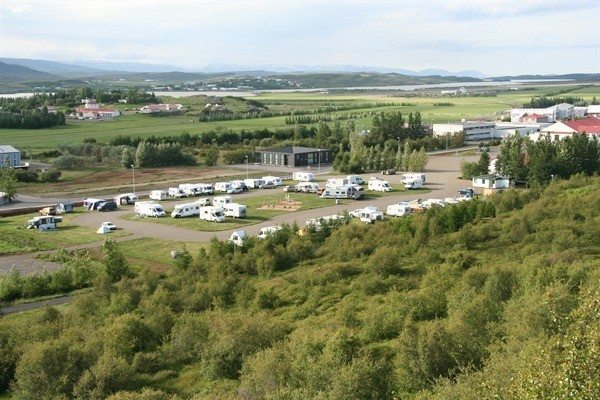
Technically, Fellabær is the next village on the Ring Road and the first in East Iceland with just under 400 people. But when you cross the bridge over Lagafljót, you are in Egilsstaðir, the capital of East Iceland. Around 2500 people live here, and like in any of the larger Iceland villages, it has all the services you need.
Egilsstaðir is a perfect center for exploring Kárahnjúkar up in the highlands, the more remote fjords on the east side or the old monastery Skriðuklaustur. It’s highly recommended that you drive south along Lagafljót too, because you will see a rare sight: a wonderful forest. Yes! Forest! 🙂
In case of a non-emergency, medical situation call 470-3000. In any emergency, call 112.
Campsite GPS: 65°15’29.60″N 14°24’28.21″W
 Reyðarfjörður
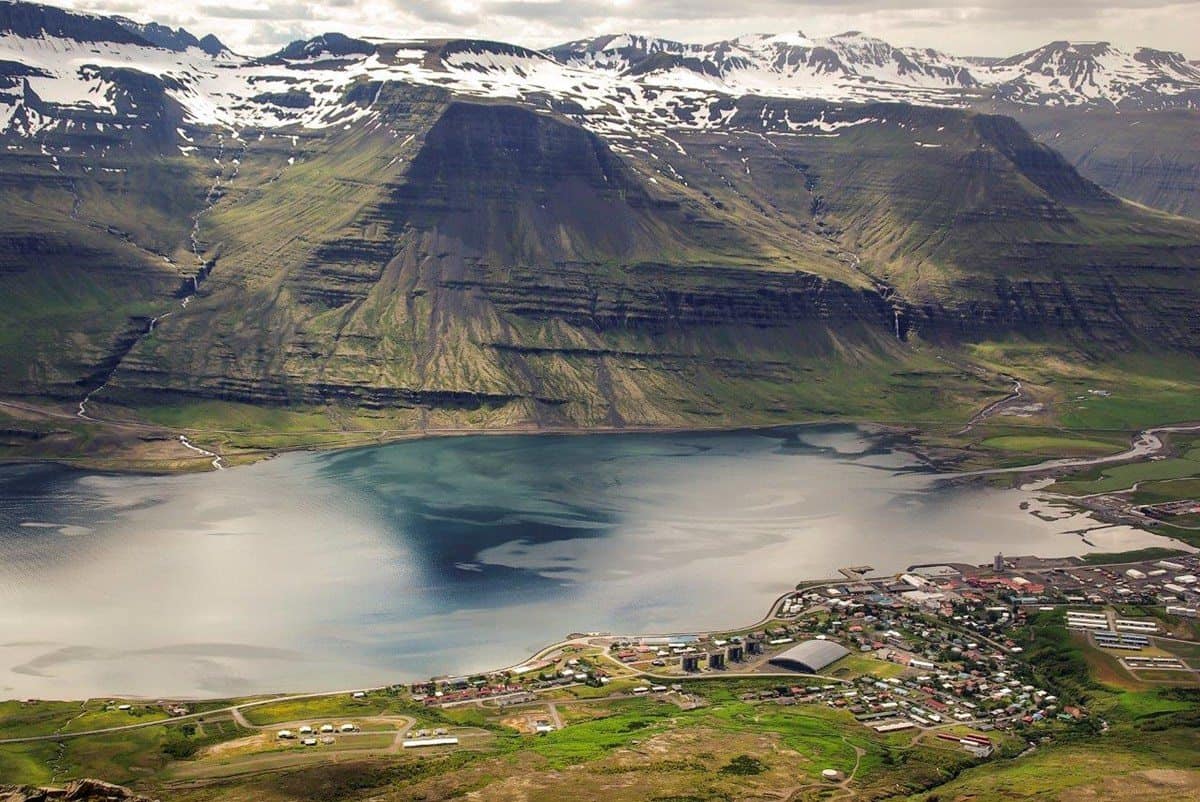
Reyðarfjörður is a beautiful little village with nearly 1,300 residents. It is well worth it to explore the three villages that lie all along road no.92: Reyðarfjörður, Eskifjörður (100 people) and Neskaupsstaður (1500 people).These three Iceland towns each have their charm and something for everybody, including museums, restaurants, events and spectacular natural wonders.
In Reyðarfjörður they have a war museum, a pond full of fish and not to forget a hike along the river Búðará up to the waterfall.
Campsite GPS: 65° 2’0.80″N 14°14’26.98″W
Fáskrúðsfjörður
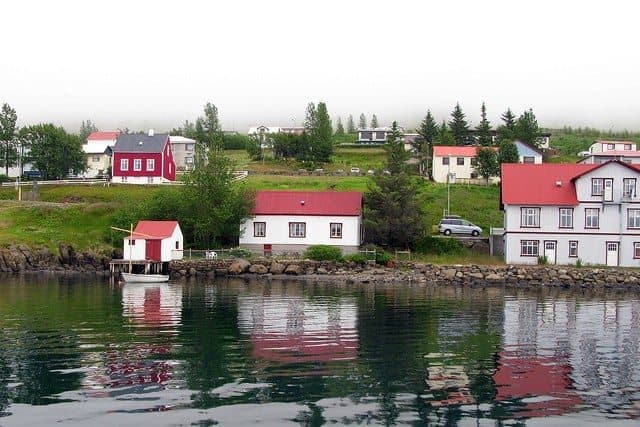
When in Fáskrúðsfjörður, you will discover quite a few French street names. Being back in the day, French fishermen used Fáskrúðsfjörður as their base and became very good friends with the locals. They even have a museum to commemorate that period. Apparently he French hospital built in 1903 is haunted. Don’t miss out on a visit to Puffin Cave (during summer) while in the area.
Campsite GPS: 64°56’11.13″N 14° 2’12.90″W
 Stöðvarfjörður
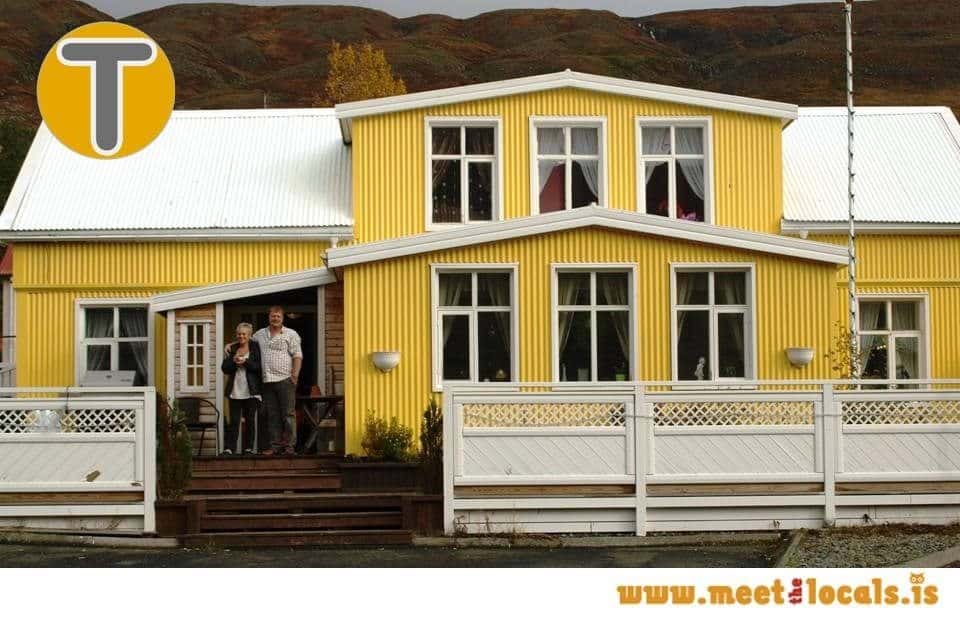
Stöðvarfjörður with its 180 inhabitants have a wonderful program called “Meet the locals“.Sign up and meet the locals while staying in the old church which has been redone as a guesthouse.
The nature around the village is very beautiful and there are many lovely hikes in the area. In the village, there is also a stone collection that might be interesting for some.
Campsite GPS: 64°49’57.63″N 13°51’40.64″W
 Breiðdalsvík
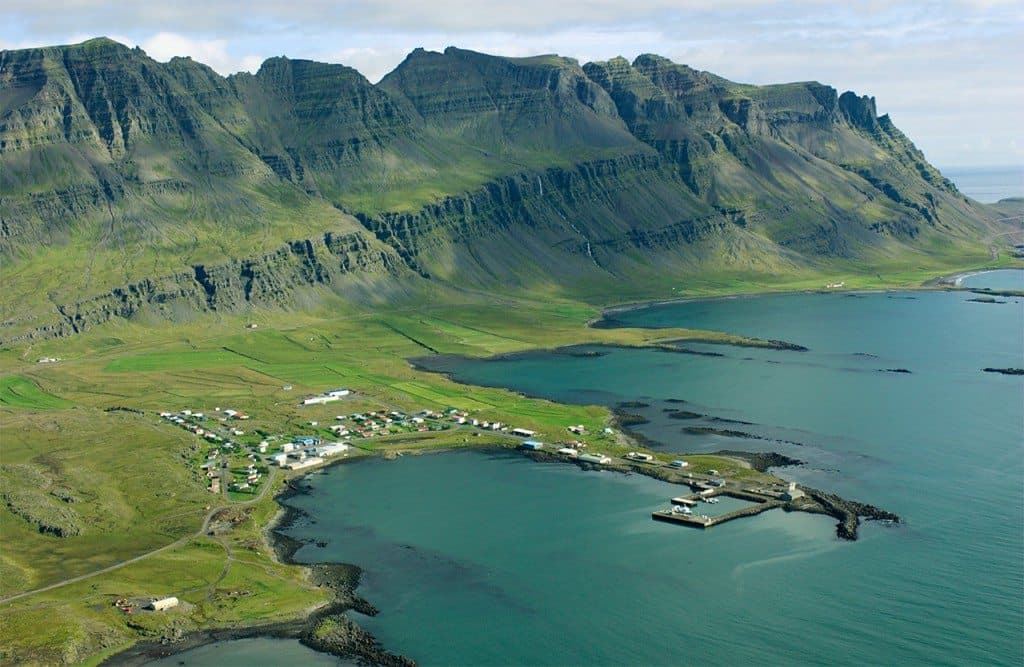
This is a very charming village with the Atlantic Ocean straight outside the mouth of the harbor. The 140 people who live there take care of their little pearl as can be seen in the old grocery store and updates to the fish factory.
Here you can really enjoy nature to the fullest with wonderful hikes and fishing in both the river and the sea. There is also a small forest where camping is allowed.
Campsite GPS: 64°47’34.94″N 14° 0’25.65″W
Djúpivogur
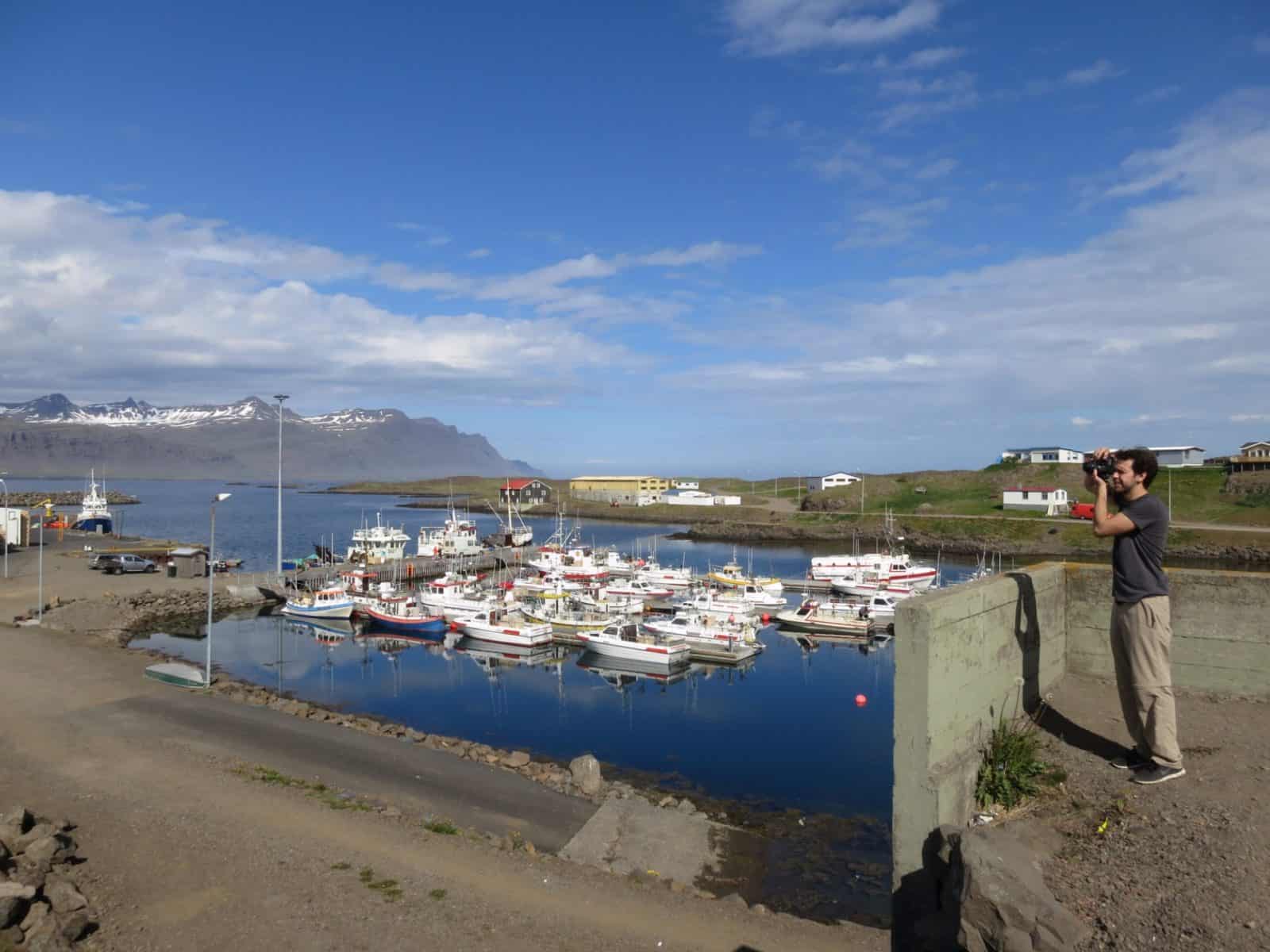
Djúpivogur is a wonderful village with 350 people. The oldest house Langabúð, built in 1790, is a central building in the village. About a kilometer away along the shore you will find a remarkable sculpture called Eggin í Gleðivík.
The nature is also fantastic here, with the mountain Búlandstindur playing a major part in the landscape. Weather permitting, take a ferry out to the island of Papey with its interesting Icelandic history. The campsite has everything you need within 500m of the campgrounds. Djúpivogur is also famous for its annual Hammond music festival.
Campsite GPS: 64°39’20.65″N 14°17’6.03″W
Höfn
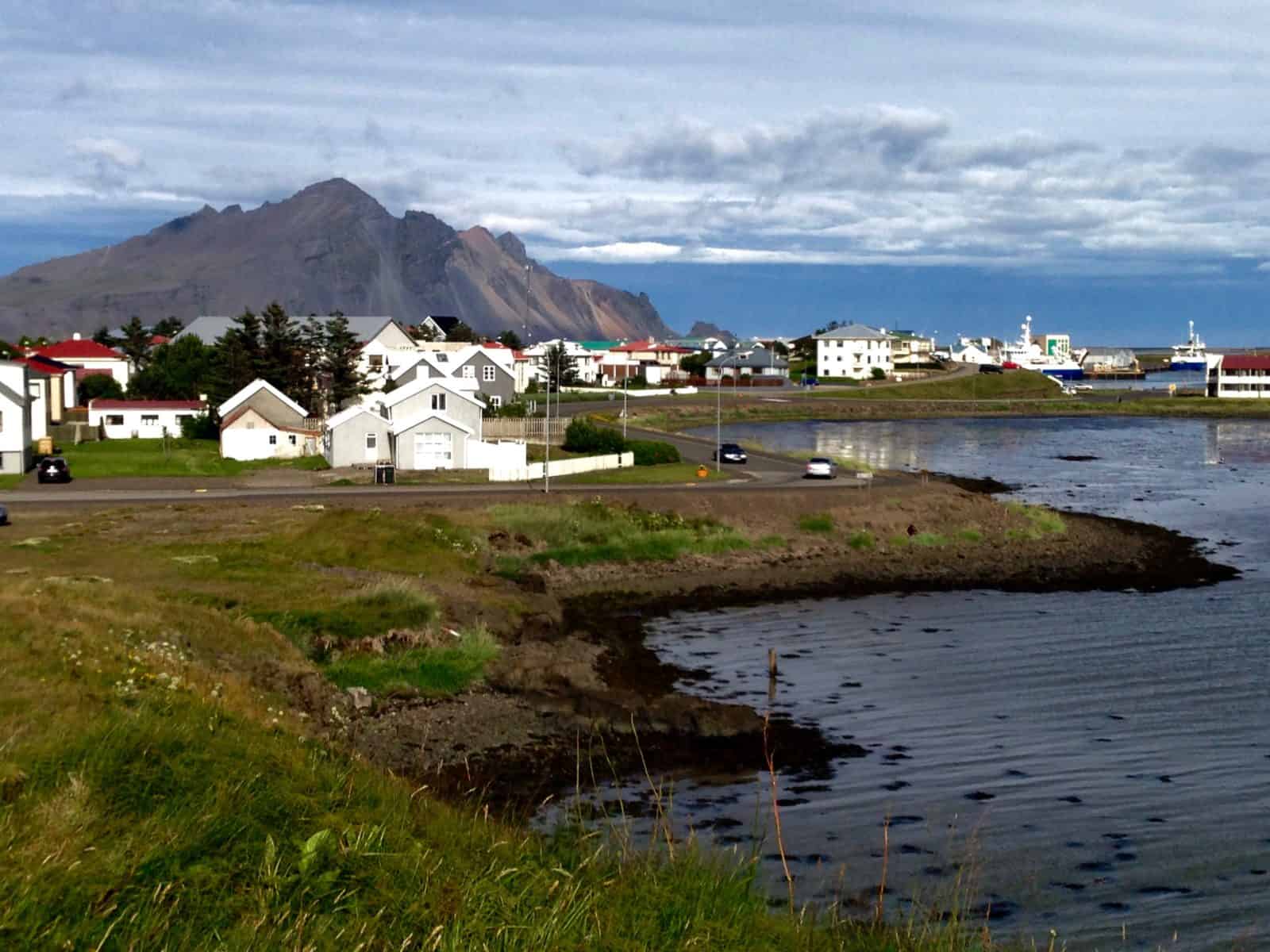
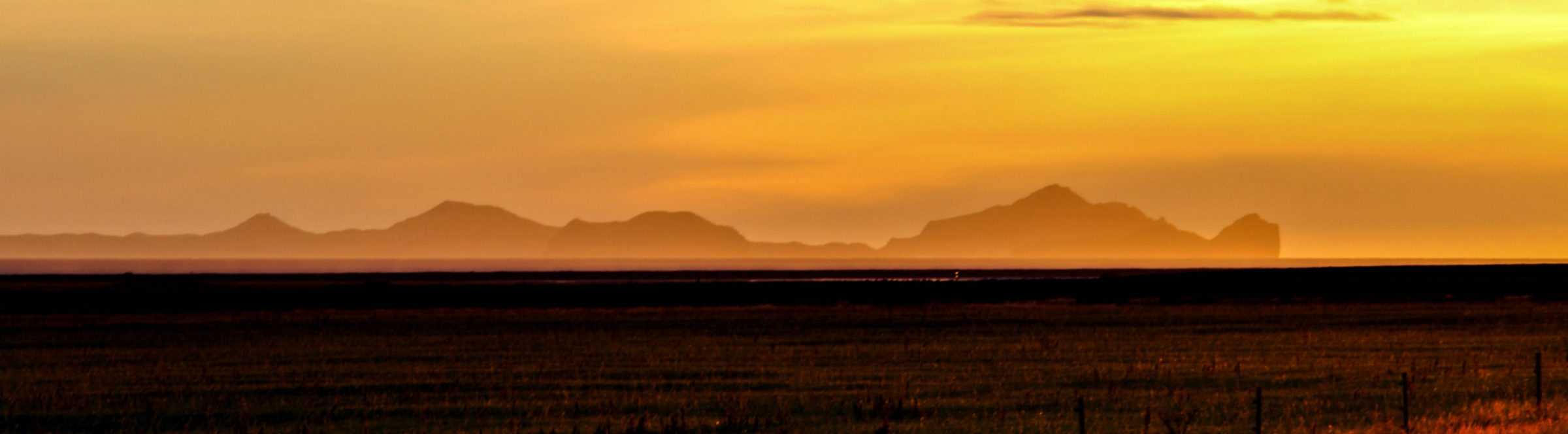
Höfn is the last village on the east side or the first on the south side, however you choose to see it. The population is around 1700. Like a few other Iceland villages on the east side, the Ring Road doesn’t go through this village, making it quieter than others. Yet again, you have a campsite well-located in the middle of the village. This village is famous for its lobsters as their lobster festival each year can testify to.
The town has everything you might need like banks, clothing stores, a supermarket and even a computer store.
In case of a non-emergency medical situation, call 470-8600. In any emergency, call 112.
The longest distance between two villages on the Ring Road is between Höfn and Kirkjubæjarklaustur, at 201 km/124.9 miles between the two villages. There is no reason for concern for you will pass at least one gas station along the way.
Campsite GPS: 64°15’29.22″N 15°12’14.94″W
Kirkjubæjarklaustur
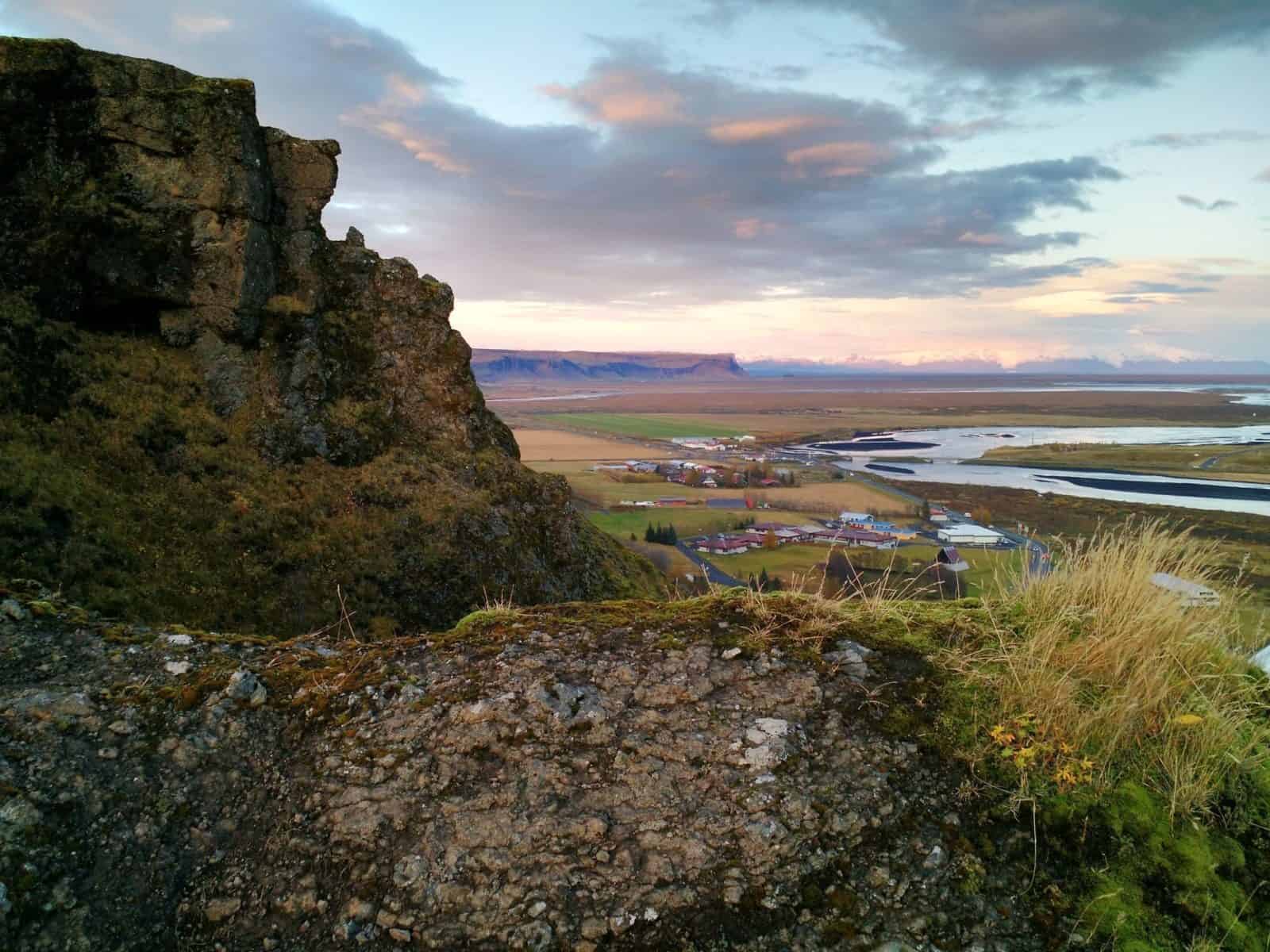
This little village lies on the borders of the flat lava fields to the south and the mountains and highlands to the north with stunning nature in both directions. There are around 180 people living here. There are plenty of interesting hikes around this village, historical sites, and stunning natural wonders. The village has a campsite, bank, post office and a supermarket.
Campsite GPS: 63°47’27.79″N 18° 2’59.50″W
Vík
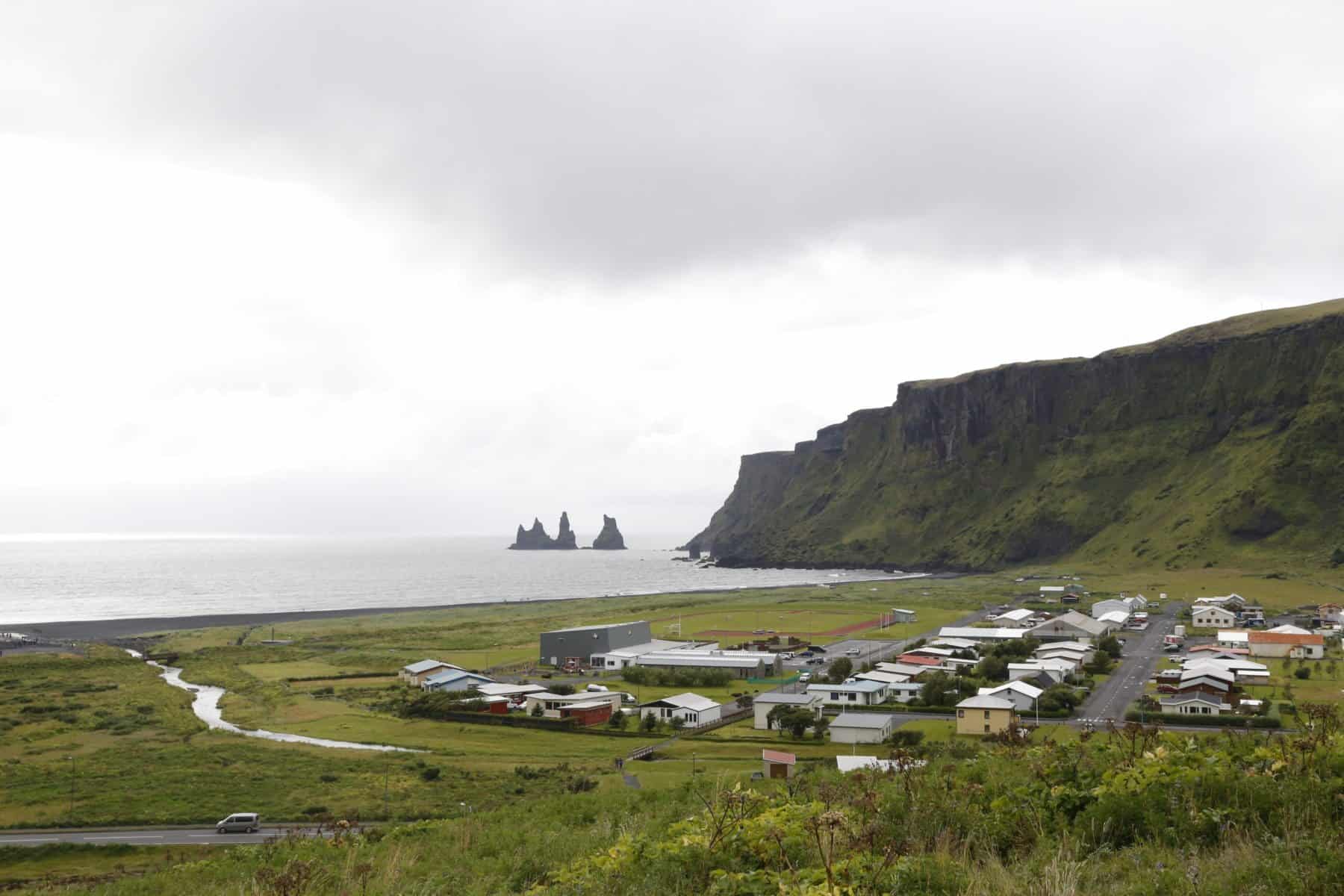
This village hardly needs an introduction. With 400 inhabitants, it probably gets its biggest share of tourism out of all the villages due to its black sand beaches, Reynisdrangar, Dýrhólaey arch, and so much more. Of course, they have a great campsite too. Vík also has a good deal of interesting hikes on offer, including an AWD tour to the crashed DC-3 plane.
In case of a non-emergency medical situation, call 432-2800. In any emergency, call 112.
Campsite GPS: 63°25’10.02″N 18°59’43.13″W
Hvolsvöllur
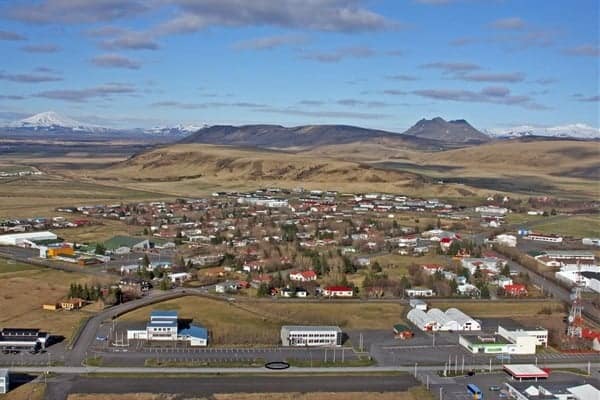
With close to a thousand people, Hvolsvöllur is one of the biggest villages on the south side. Around this area, you’ll find a lot of stables and connections to the Icelandic sagas. Hvolsvöllur is the only village in Iceland that is not developed by the sea, river, or lake. Around the village you’ll find Njál’s saga center with information about historically important events, which you can read about in the sagas. Hvolsvöllur is the epicenter of these events.
From here you can also travel to the famous waterfalls and not to mention, hike around Eyjafjallajökull.
Here you’ll find all the necessary services you might need like a bank, stores, a campsite and a post office.
In case of a non-emergency medical situation, call 432-2700. In any emergency, call 112.
Campsite GPS: 63°44’59.22″N 20°14’19.20″W
Hella
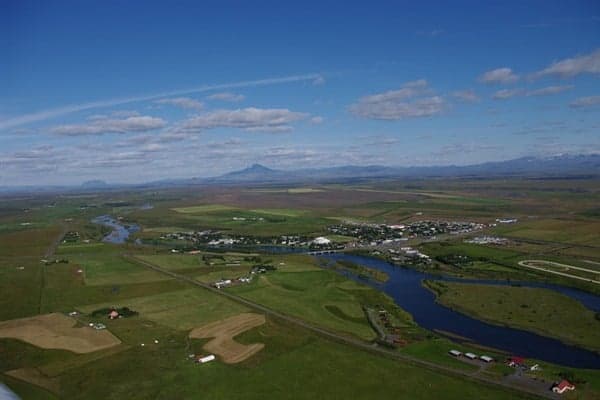
A lovely little fishing village on the banks of Ytri Rangá with 850 inhabitants. Hella is similar to Hvolsvöllur with a bank, campsite, stores and whatnot. They also have a fantastic little swimming pool with two water slides. The river itself is one of the best salmon rivers in Iceland but permits might be hard to get on site. Fishing licenses are usually sold during the winter before the summer.
In case of a non-emergency medical situation, call 432-2700. In any emergency, call 112.
Campsite GPS: 63°49’58.45″N 20°24’24.55″W
 Selfoss
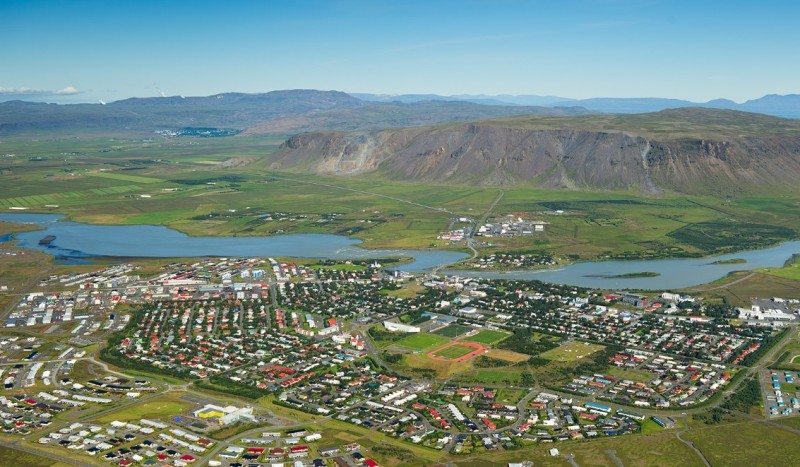
Selfoss with around 7,600 inhabitants, is the largest town in South Iceland. Here you have everything you want, even a forest on the north side and a golf course. The center has big stores, restaurants, banks and the grave of the chess master Bobby Fisher.
There are a couple of campsites to choose from in and outside of the village and the local swimming pool boasts both an outdoor and indoor pool.
In case of a non-emergency medical situation, call 432-2000. In any emergency, call 112.
Campsite GPS: 63°56’0.25″N 20°59’18.59″W
Hveragerði

This cozy little village is the last one you pass when driving to Reykjavík clockwise around the Ring Road. Hveragerði has about 2,600 residents. The area is highly geothermal as can be seen when driving above the village, which is why it’s called the hot springs capital of the world by the locals. You’ll also find the Reykjadalur hot spring area here. It’s a 40-minute walk from Hveragerði and is definitely worth it. How often will you have the opportunity to swim in a very warm river?
While there, make sure you get to taste some of the produce grown in the huge greenhouses.
Campsite GPS: 63°59’56.17″N 21°10’54.00″W
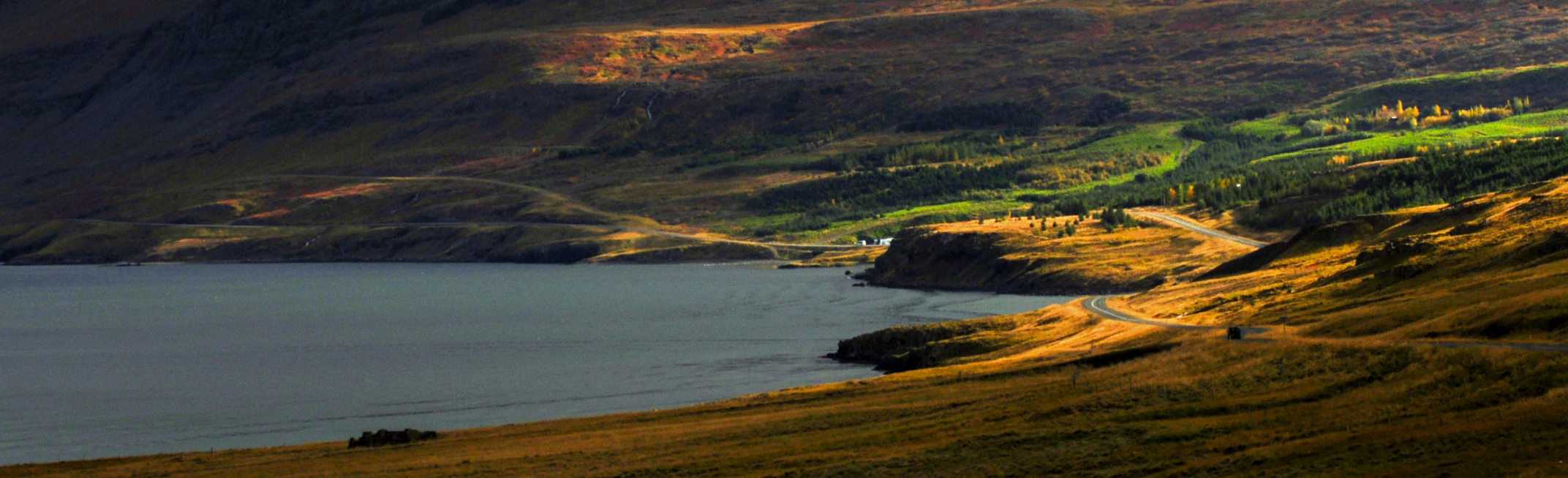
These small towns in Iceland and Iceland villages are the ones you’ll pass when you drive the Ring Road. There are, of course, many more, not to mention the Westfjords and Snæfellsnes peninsula which are not included in the Ring Road trip. All farms and churches also have names so don’t get confused with all the name signs you will encounter on your trip around Iceland.
Ready to hit the road? Get started by choosing your camper. Our guide can help you decide if a 4×4 or 2WD camper is better for your visit.
Happy Camping!


Iceland Travel Guides
If you like what you see, please subscribe to our YouTube channel!